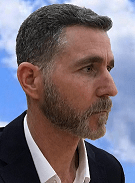
Partner Introductions, Chapter 2: Jeff Dougherty

Another component of our business is in legal opinion based research.  Much like we partner with Marie Mound for her expertise with focus groups and other similar market opinion research, we also work with an expert in this legal area: Jeff Dougherty.

Jeff’s Specialties

Jeff has worked as a trial consultant on high stakes civil litigation since 2002. As a trial consultant, he has seen the disastrous consequences of parties to a lawsuit going to trial without first testing in front of a group of mock jurors similar in makeup to the anticipated jury.

He believes that just as a product developer would never launch its product into the marketplace before performing market research and product testing, a party to a lawsuit should never “launch” their case to the jury without doing the same. When it comes to trial, “market testing” is done in the form of focus groups and mock trials.

But, not all focus groups and mock trials are created equally. This is where Jeff’s training and experience come into play. His post-graduate work in clinical and research psychology and his graduate studies in litigation consulting taught him how to conduct small group research that is scientifically sound with respect to validity and reliability. The problem for the unsuspecting client is that a focus group designed by someone without the right training might look and run smoothly, but something fundamental about the design could be amiss and the client will never know the difference until it’s too late.  

Custom Designed for Each Client

Jeff’s vast experience in designing and executing focus groups and mock trials over the years has given him the ability and insight to design small group research tailor-made to each individual piece of litigation. Because the needs of every case differ, not all pre-trial research looks the same. Sometimes it might take the form of a half-day focus group designed to test mock jurors’ assessment of one or two key witnesses or potential trial themes. Other times it can take the form adversarial case summaries and mock juror deliberations.  Yet other times it might be a multiple-day mock trial containing opening statements direct- and cross-examination of live witnesses, closing arguments and mock juror deliberations. Jeff’s pre-trial research philosophy is that the research design always depends on the needs of the client.

In addition to pre-trial jury research, Jeff is also skilled at designing voir dire questions, assisting with jury selection, conducting shadow juries, preparing witnesses to testify in depositions and on the witness stand and conducting post-trial juror interviews.

For more detail about Jeff’s areas of expertise, see: www.LitigationIQ.com

For “Advice from a Trial Consultant” see Jeff’s Blog: https://www.litigationiq.com/blog/
The Learning Curve, Part 1

One of the core competencies we pride ourselves on at Record My Research is our experience. Experience often learned through client requests, through research into what others have done and, more than occasionally, through the school of hard knocks.

But to say ‘we have experience’ on a web page and ask you to trust us with your business is not enough. With that in mind, we will be writing an occasional series in this blog that highlights some of the specifics that we have learned while working with clients to record their research. Of course, we’ll keep the names out and locations a bit vague to protect the confidentiality of our clients.

Carry-on

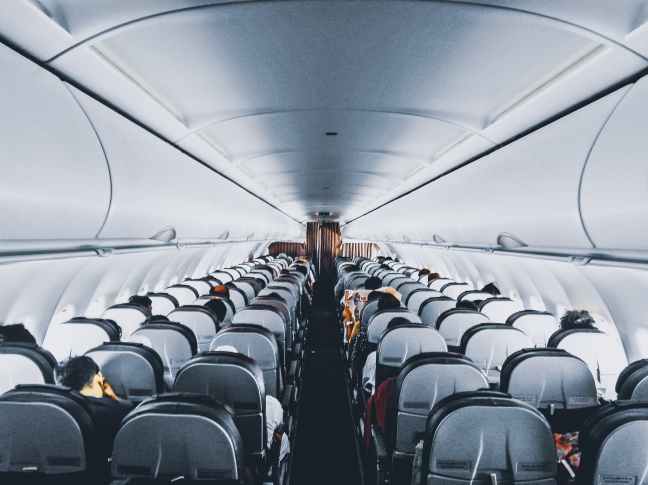
We travel for most of our events which means packing our equipment and taking it with us on airplanes. And it is enough equipment that it won’t all fit in carry-on. Or technicians always keep core, vital equipment in carry-on: the main video camera, a back up camera, an audio recorder, microphones, backup microphones, video recorders and amplifiers and enough cable to get the closed-circuit feed working. And a dress shirt or logo’d polo, depending on the client. Equipment that can usually be rented or purchased on site (if we have to) is checked: more cables, additional amplifiers and such.

One client had a job that required travel through Boston Logan airport to a small regional airport in northern New England. Everything worked the way that it was supposed to on the way out. Challenges happened on the way back.

Arriving into Logan, our tech discovered that his connecting flights had been cancelled. He was given an option of staying the night and getting a flight the next day or getting the last seat on the last flight that night which left in thirty minutes. From a different terminal. Which, at Logan, means going back through a TSA checkpoint.

He arrived at the gate, out of breath lugging his backpack and carry-on as they were getting ready to close up. Then he was told that there was no more overhead bin space. He needed to check the carry-on with all of the key equipment. And all of the recordings of the event.

Of course they lost the luggage.

Eventually, the airline found the luggage and got us back our equipment and recordings. But, there was approximately thirty-six hours where we did not have any of the event recordings and no idea if we would ever get them back.

Key Learning

As a result of this chain of events, we now ask our technicians to carry one copy of the event recordings on their person; usually an SD Card in a pocket. On occasion, we have also FedEx’d a copy back from an event if it looks like there will be travel problems or other issues.

This particular disruption happened on the way back from an event. We’ve been fortunate, so far, that something like this has not happened on the way to one. But that does not mean we don’t plan for it. We keep an eye on travel delays and, if it looks bad, will ship additional gear in advance. This adds its own set of complexities (shipping delays, lost shipments, tracking down the shipment on the other end), but if that is what it takes, we’ll do it.

Our Core Competencies

Over our 15 years of recording our clients’ research projects, we’ve learned to focus on three things that make or break research in the field, from an AV perspective:

  • Experience
  • Redundancy
  • Flexibility

Experience

First, we’ve learned what focus group teams want from an AV partner.  The camera needs to be out of the way so that it doesn’t hinder the conversation.  It needs to focus on the participants and capture their words and body language. We need to work with the facilitator to make sure that everything is clear and natural.  That the topic is the center of attention, not the equipment. The audio and video feeds needs to be securely monitored in real time by clients, whether on- or off-site.

Redundancy

That experience led us to the second of our three things.  We know that things happen. Even the best equipment can have problems.  That’s why we have three independent records of everything that happens in the room.  The video feed is recorded to three different storage devices. The audio feed is recorded with three separate microphones. We even have a discrete, backup video camera and stand-alone audio recorder in case there are problems with the primary equipment.  We want to make sure that, no matter what, you get results from your sessions.

Flexibility

Finally, we pride ourselves on our flexibility.  We can accommodate more than the standard one camera setup, if that’s what you want.  We have a center table panorama camera that lets you focus on each participant in real time.  We offer streaming services for those observers that are unable to make it to the site. Let us know what challenges you are facing and we’ll probably have a solution.

At Record My Research, we know what it takes to make a project happen.  Let us help you make yours happen.